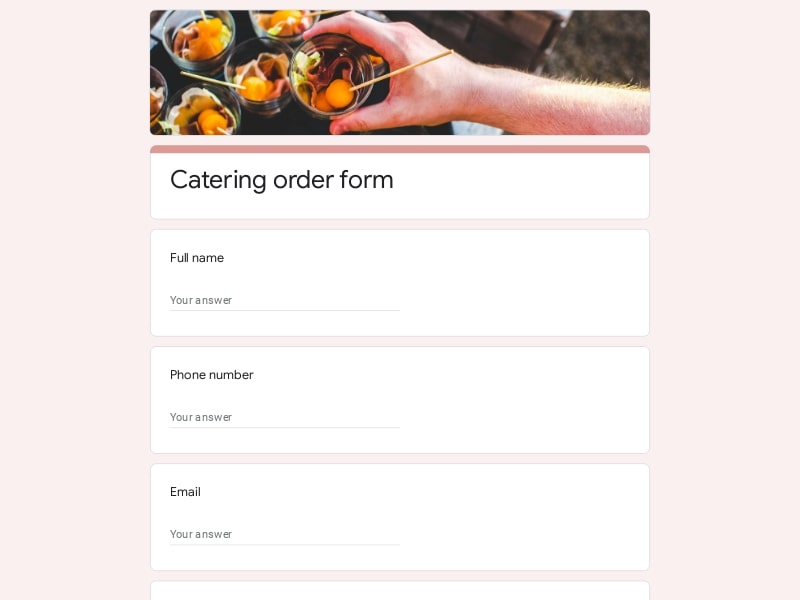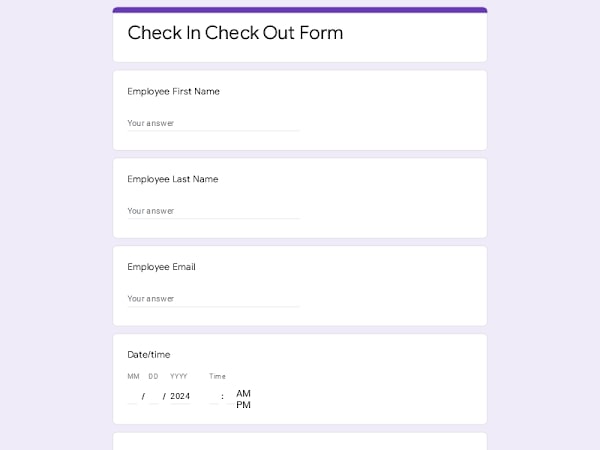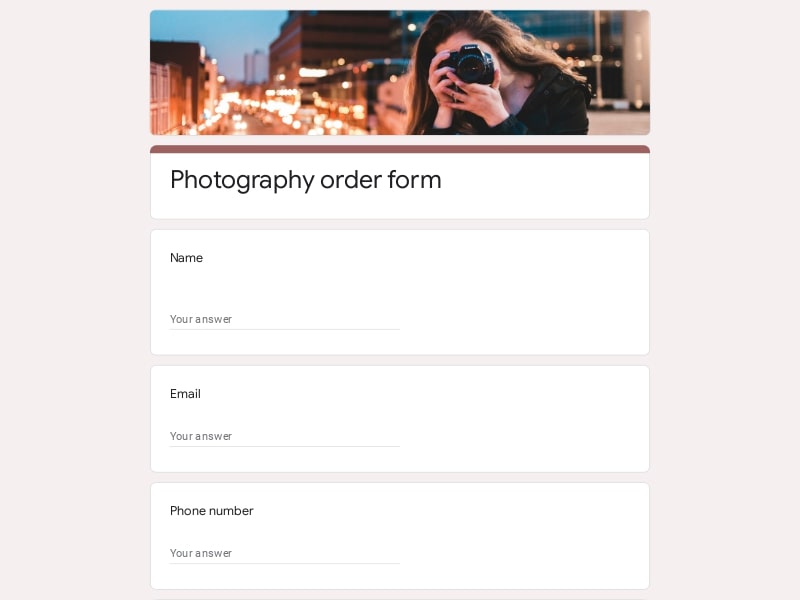

Good feedback is easier to collect when the experience is still fresh in people’s minds. These ready-to-use event feedback form templates for Google Forms help organizers gather clear attendee insights, improve future events, and review responses in one organized place without building a survey from scratch.
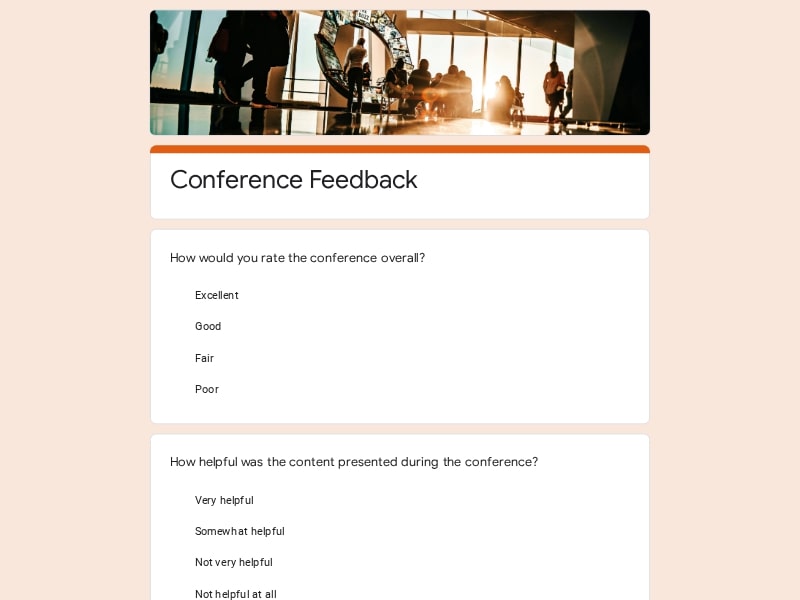 Preview
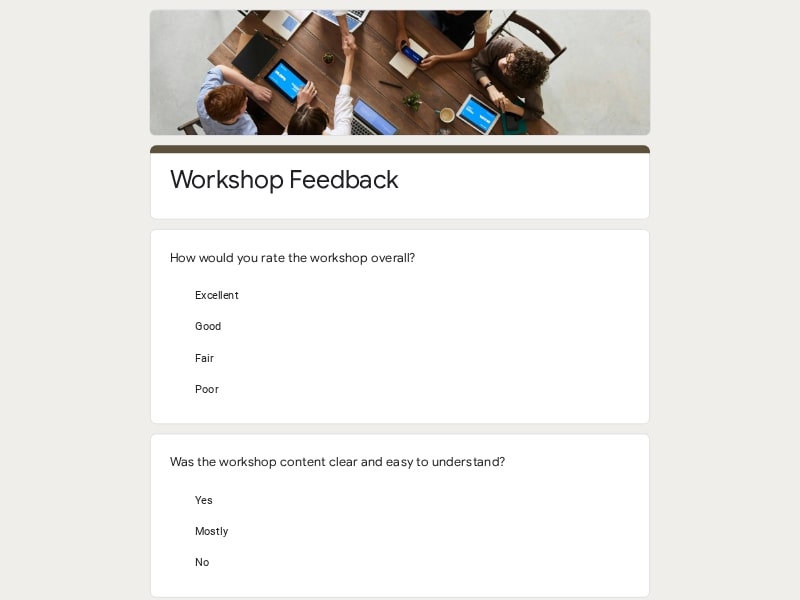 Preview
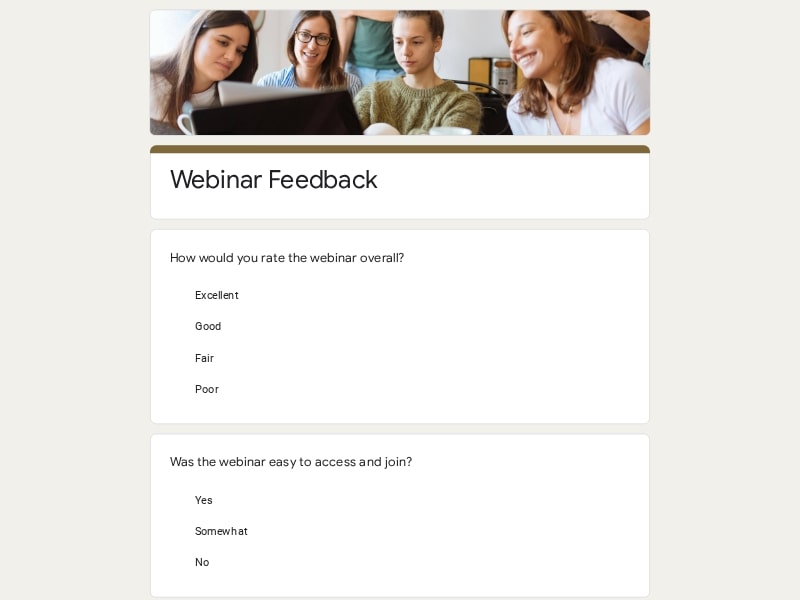 Preview
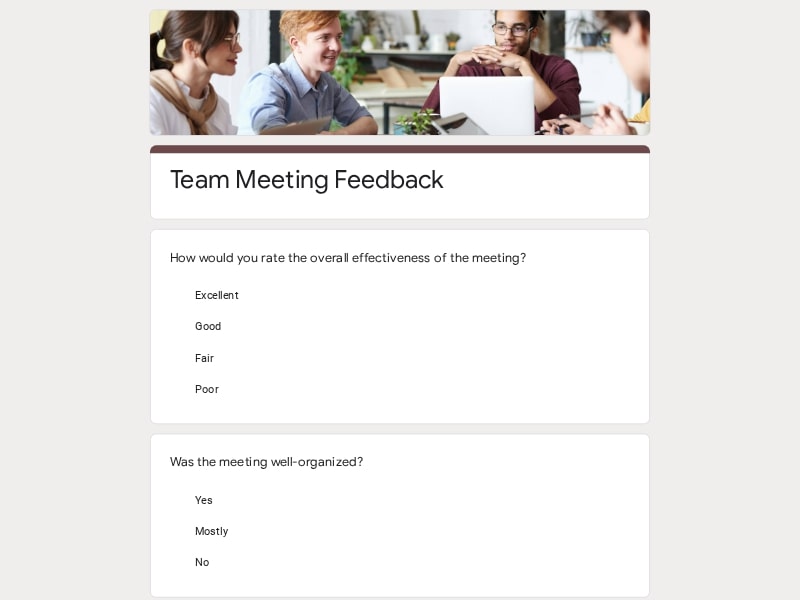 Preview
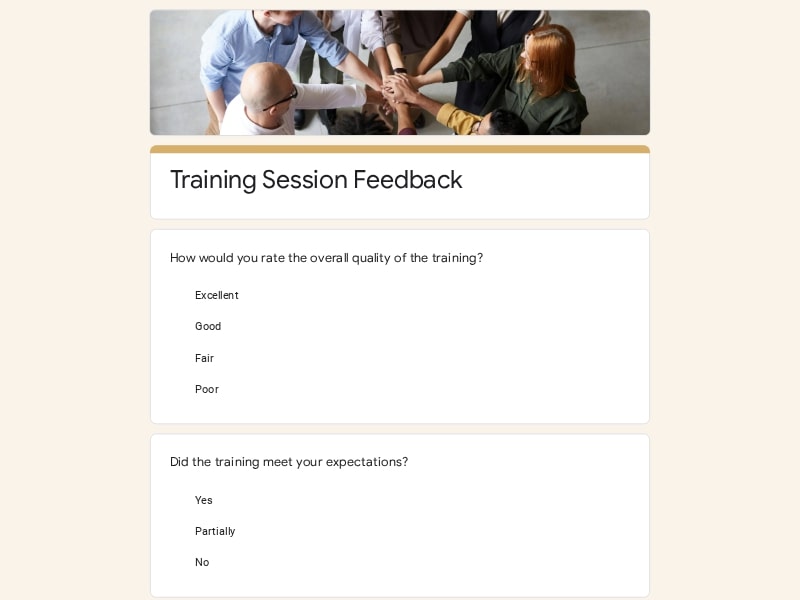 Preview
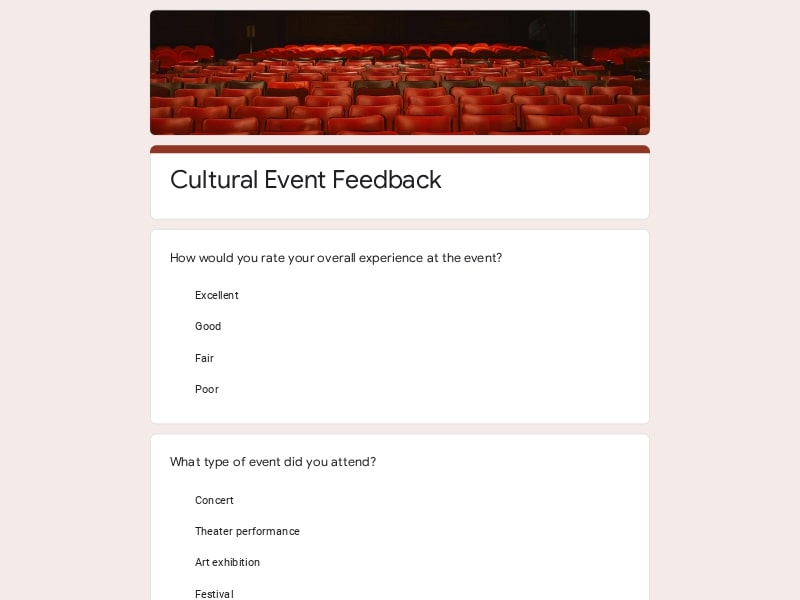 Preview
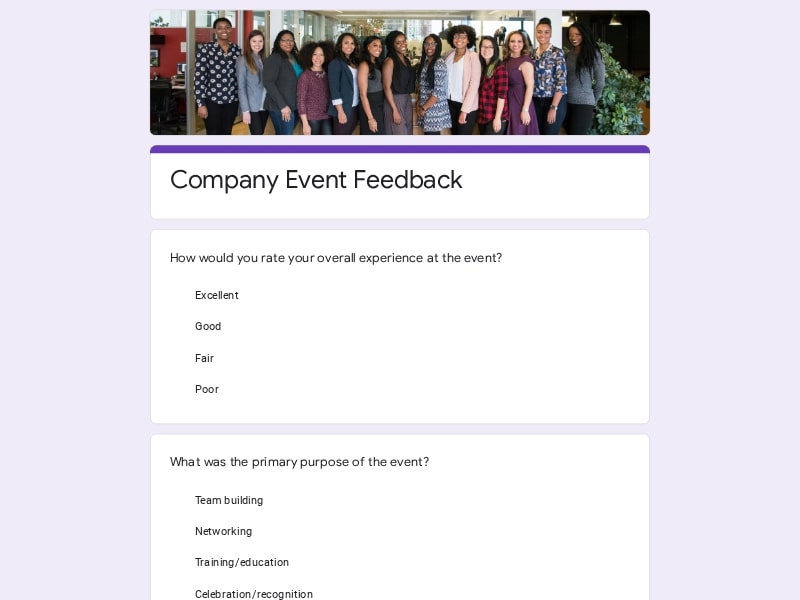 Preview
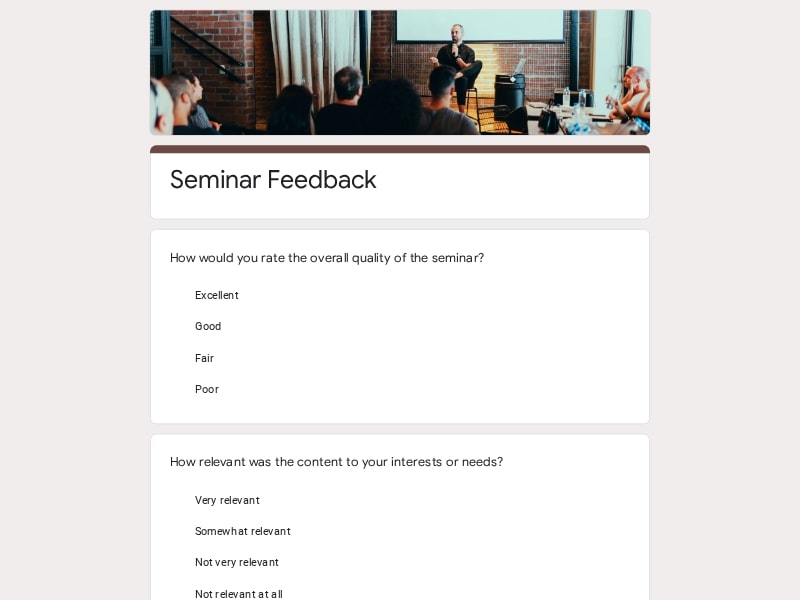 Preview
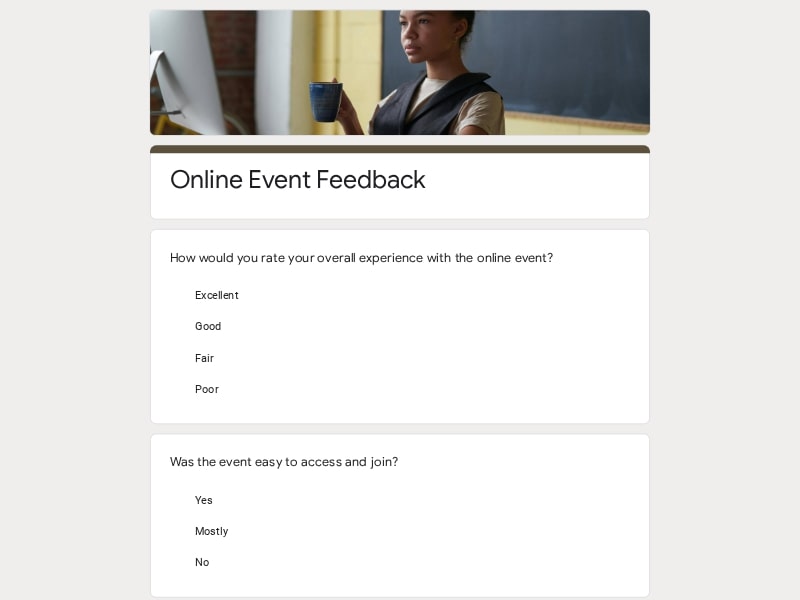 Preview
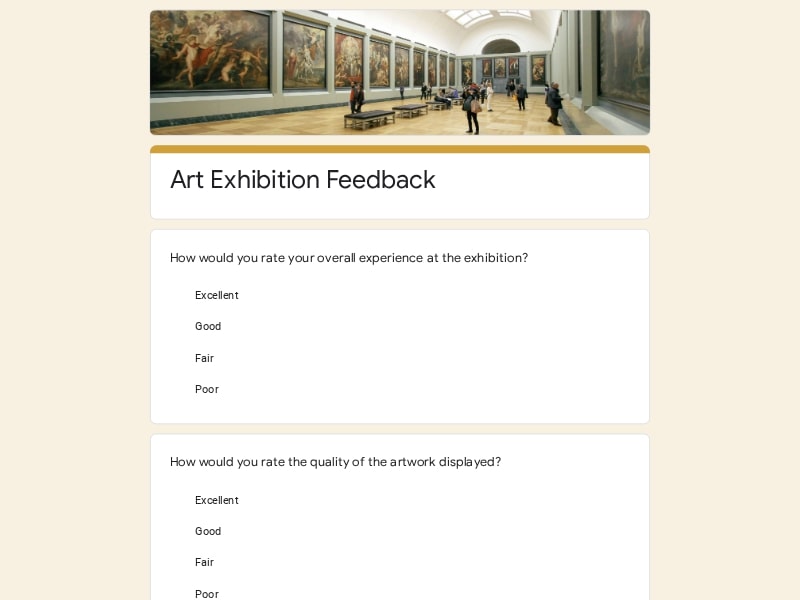 Preview
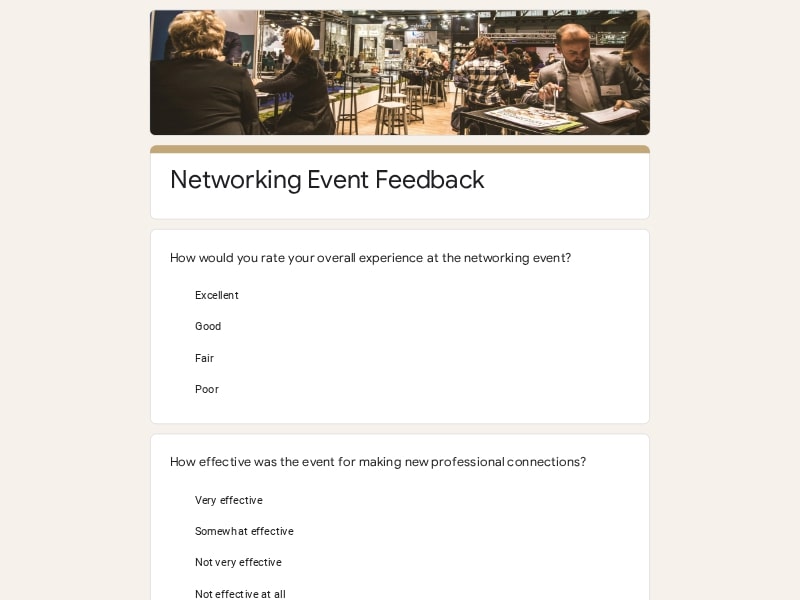 Preview
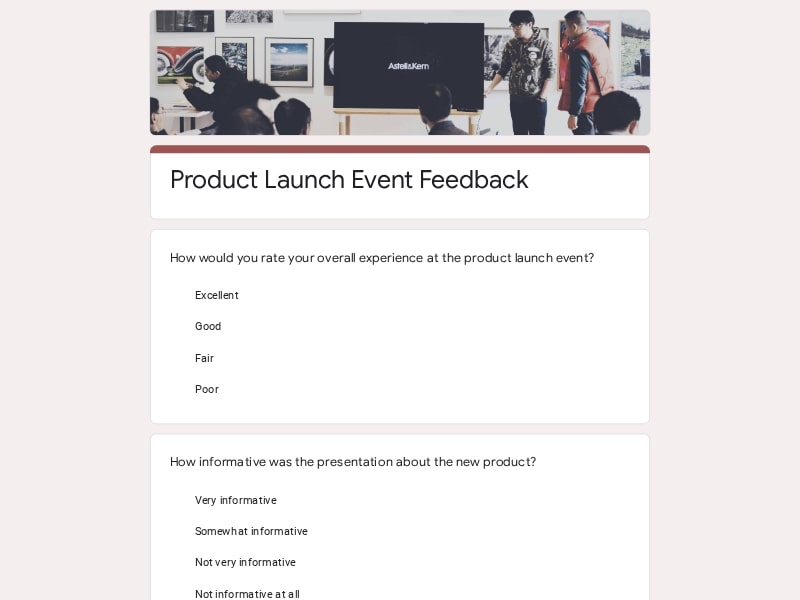 Preview
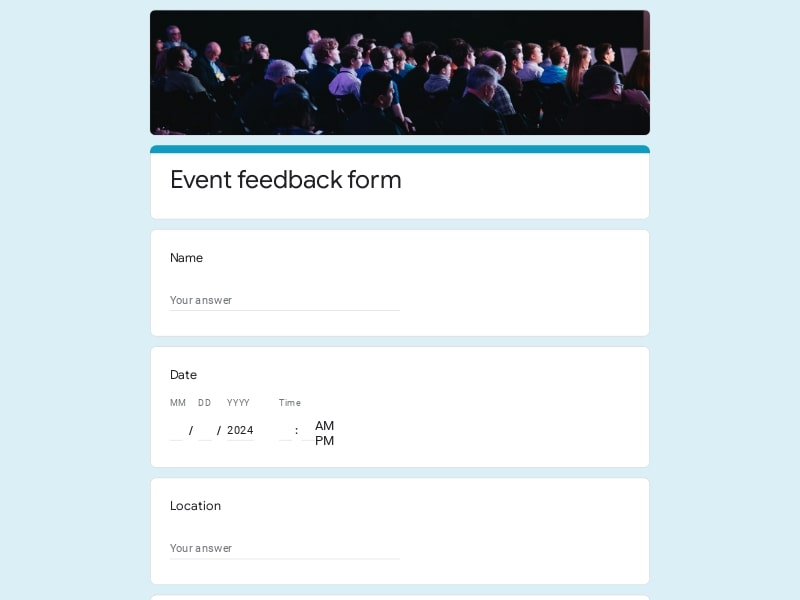 Preview
An event feedback form is a structured questionnaire used to collect opinions, ratings, comments, and post event evaluation data after an event, meeting, webinar, conference, or session ends. Businesses, schools, nonprofits, marketing teams, and community organizers use these forms to measure attendee satisfaction, understand participant experience, evaluate speakers and activities, and improve future planning.
These forms are commonly used for conference survey workflows, seminar feedback collection, virtual event evaluation, training programs, networking events, exhibitions, festivals, charity event reporting, sports event reviews, internal team building activities, ceremonies, competitions, and customer-facing B2B launch events. In Google Forms, organizers can quickly customize a sample template, collect responses on any device, and export answers to Excel, Google Sheets, or PDF formats for reporting and evaluation.
A good post-event questionnaire isn't just a list of rating scales — it's a structured conversation with your attendees. Each section serves a different purpose: some questions measure satisfaction, others uncover friction, and a few open-ended ones reveal things you never thought to ask. Here's how to break it down.
| Section | What to Include | Example Questions |
|---|---|---|
| Overall Experience | A general satisfaction rating and a first-impression question. Sets the baseline for the entire evaluation and gives you a quick NPS-style benchmark across events. |
How would you rate your overall experience at this event? (1–10) Did the event meet your expectations? (Yes / Partially / No) How likely are you to attend again? (1–5 scale) In one word, how would you describe today's event? |
| Content & Sessions | Per-session or per-track ratings for conferences, seminars, and training events. Helps identify which topics resonated and which fell flat. |
Which session did you find most valuable, and why? Was the content level appropriate for your experience? (Too basic / Just right / Too advanced) How relevant was the material to your day-to-day work? Were there any topics you expected to be covered that weren't? |
| Speaker or Presenter Quality | Individual ratings for speakers, facilitators, or performers. Especially important for conferences, webinars, and training sessions where the presenter drives the value. |
How would you rate the speaker's clarity and delivery? (1–5) Did the presenter allow enough time for Q&A? Which speaker would you most like to see at a future event? Was the presentation style engaging and easy to follow? |
| Logistics & Organization | Venue, timing, registration, communication, and flow. Even excellent content can be undermined by poor scheduling or a chaotic check-in experience. |
How smooth was the registration and check-in process? Was the event schedule communicated clearly in advance? How would you rate the venue (location, facilities, comfort)? Were breaks and transitions between sessions well-timed? |
| Networking & Interaction | Quality of peer connections, structured networking activities, and opportunities to engage with other participants. Critical for B2B launch events, exhibitions, and professional conferences. |
Did you have enough opportunities to connect with other attendees? How would you rate the quality of the networking sessions? Did you make any meaningful professional connections today? Were the group activities or icebreakers helpful or unnecessary? |
| Virtual Experience (if applicable) | Platform usability, audio/video quality, and engagement tools for webinars and virtual events. These questions replace or supplement venue-related logistics. |
How would you rate the technical quality of the stream? (1–5) Was the virtual platform easy to navigate? Did you experience any technical issues during the event? Did you feel as engaged as you would at an in-person event? |
| Open-Ended Feedback | Unstructured space for attendees to share anything a rating scale can't capture — often the most valuable part of the entire questionnaire. |
What was the highlight of the event for you? What's the one thing you'd change about today? Is there anything else you'd like us to know? What topics or speakers would you like to see at future events? |
| Demographics & Segmentation (optional) | Role, industry, or attendance type — useful when you need to analyze feedback by audience segment, especially for exhibitions, competitions, and multi-track conferences. |
What best describes your role? (e.g., Manager / Individual Contributor / Executive) Is this your first time attending this event? How did you hear about us? Which industry do you work in? |
A form for a charity run looks nothing like one for a corporate seminar. Below are the most common types of post-event feedback templates, what makes each one different, and who gets the most value out of them.
Large professional conferences involve multiple tracks, speakers, and sessions — so the evaluation needs to be equally layered. A conference survey typically includes per-session ratings, speaker scores, and questions about the overall agenda flow. Attendees are often professionals evaluating ROI on their time, so questions about practical takeaways and follow-up resources carry real weight. Organizers use these forms to rank sessions for future editions and justify speaker invitations.
Seminars are smaller and more focused, which means participants expect depth. Seminar feedback forms zero in on content quality, the instructor's ability to explain complex material, and whether the format matched the learning goals. These are especially common in corporate training, continuing education, and certification programs. The key metric here isn't just satisfaction — it's whether participants actually learned something they can use.
Virtual events come with a unique set of friction points: platform issues, screen fatigue, weak engagement, and audio problems that would never exist in a room. A webinar feedback form addresses both the technical side (stream quality, platform usability) and the content side (relevance, pacing, interactivity). These forms are typically sent via email immediately after the session ends, and because attendees are already online, response rates tend to be higher than for in-person events.
Whether it's an all-day team building retreat or a focused skills training session, these forms measure both the experience and the outcome. Did participants feel the time was well spent? Did the activities actually build team cohesion or improve specific skills? HR teams and learning & development managers rely on these evaluations to justify program budgets and refine future sessions. Questions often include pre/post self-assessments and manager-facing summary items.
Visitors at an exhibition or trade show are there to explore — not to sit through sessions. Their feedback centers on booth quality, product demonstrations, lead conversations, and the overall floor experience. Organizers want to know which exhibitors drove the most engagement and whether the layout supported discovery. For exhibitors themselves, a short post-show questionnaire helps qualify leads and identify the most promising follow-ups.
Pure networking events — mixers, roundtables, speed networking sessions — live or die by the quality of the connections made. Forms for these events ask whether participants met the right people, whether the format encouraged meaningful conversations, and whether the host's structure helped or got in the way. These are common in startup communities, professional associations, alumni groups, and industry clusters.
A B2B launch event is part product demo, part relationship builder. Attendee feedback here needs to capture purchase intent, perceived product value, clarity of the pitch, and quality of one-on-one meetings. Sales and marketing teams use these forms to prioritize follow-up outreach and measure how well the event moved prospects through the funnel. These forms are often short but carefully worded to surface commercial signals.
Corporate parties, award ceremonies, and social gatherings call for a lighter touch. Guest feedback forms focus on atmosphere, catering, entertainment, and the overall vibe — not business outcomes. Event planners use these responses to refine their vendor selections and venue choices for the next event. The tone of the form itself should match the event: relaxed, brief, and easy to fill out on a phone.
Festivals bring together massive and diverse crowds, which means feedback needs to cover a lot of ground: lineup satisfaction, crowd management, facilities, food and drink, safety, and accessibility. Because the audience is broad, these forms use simple language and short questions. Festival organizers often run post-event surveys through social media links or email newsletters, targeting attendees who opted in during registration.
Participants in a sports event — whether it's a corporate 5K, an esports tournament, or a regional competition — care about fairness, organization, communication, and the overall atmosphere. Spectator forms and participant forms often differ: competitors want to know their feedback influenced the rules or format, while spectators care more about the experience in the stands. These forms are typically brief and distributed via QR code at the venue.
For charity events, the emotional dimension matters as much as the logistics. Donors and volunteers want to feel that their time and money made a difference — and the feedback form should reflect that. Questions cover event experience, but also mission clarity, communication quality, and likelihood of future support. Nonprofits use these forms to retain donors, recognize volunteers, and demonstrate accountability to their boards.
Hybrid events serve two distinct audiences simultaneously — in-person attendees and remote participants — and their experiences can be wildly different. A thoughtful hybrid event form collects feedback from both groups separately and compares results. Remote participants often feel like second-class attendees, so questions about inclusion, stream quality, and interaction opportunities are especially important to track and improve.
Awards ceremonies are high-stakes events where the mood and execution matter enormously. Attendee feedback focuses on the quality of the program, the pacing of the ceremony, the clarity of criteria, and whether the event felt prestigious and well-organized. These forms are common in corporate environments, industry associations, and media companies.
Google Forms makes feedback collection simple for both organizers and attendees. Instead of managing paper questionnaires or complicated survey systems, teams can launch a professional event feedback form in minutes, collect responses in real time, and automatically organize data for review and reporting.
Organizers can duplicate a sample template and quickly customize questions for a conference, webinar, meeting, seminar, networking event, training session, or post event evaluation workflow without technical experience.
Forms work well on phones, tablets, and desktops, making it easier for attendees and participants to submit feedback immediately after a session or event while the experience is still fresh.
Responses appear instantly inside Google Forms and Google Sheets, allowing organizers to monitor satisfaction, review comments, and track evaluation data as submissions arrive.
Teams can export responses to Excel, Google Sheet, or PDF formats for post event reports, sponsor summaries, internal evaluation meetings, or long-term analytics.
Google Forms supports ratings, multiple choice questions, checkboxes, scales, dropdowns, and long-answer review sections, making it suitable for almost every type of event questionnaire.
Whether collecting seminar feedback after a webinar or reviewing guest experience after a festival or exhibition, forms can be shared through email, QR codes, websites, or live chat links.
Marketing teams, event coordinators, HR departments, and organizers can collaborate inside the same form, review responses together, and update questions when event requirements change.
Structured answers make it easier to compare session ratings, identify satisfaction trends, evaluate speakers, and improve future event planning based on real attendee feedback.
Choose your platform and follow the steps to get your event feedback form live in minutes.
Install Google Forms from the App Store. You'll need iOS 16 or later.
Open the app and sign in with your Google account. This is required to save and share forms.
Tap the template in the list.
Edit any question, add your flavor options, update the design theme and colors — all from within the app.
Tap the Share button (top right). Choose how to distribute your form:
The template is instantly copied to your Google Drive — no manual setup needed. You must be signed in to your Google account for this to work.
Auto-copied to Google DriveEdit question text, add your actual flavor options, adjust dropdowns, and personalize the form to your bakery.
Toggle "Required" on essential fields — name, email, order date, and quantity — so no key detail is missed.
Use Google Forms' built-in sharing to distribute your form via URL, embed it on a site, or generate a printable QR code.
Responses appear in real time in the Responses tab, or link to Google Sheets for a full sortable order spreadsheet.
Make sure you're signed in to Google before clicking the button. The form opens directly in Google Forms in your browser — no app download needed.
Choose a ready-made template for your needs and customize it in just a few minutes.
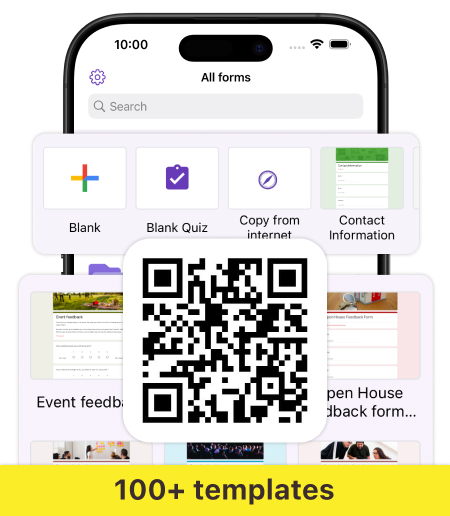
Scan to use Google Forms on iPhone or iPad!