

When supply needs start arriving from every desk, classroom, clinic, or job site, scattered emails and verbal notes stop being manageable. These Google Forms templates turn every supply request into a clean, trackable workflow—so ordering, approval, and inventory decisions happen faster with less back-and-forth.
 Preview
 Preview
 Preview
 Preview
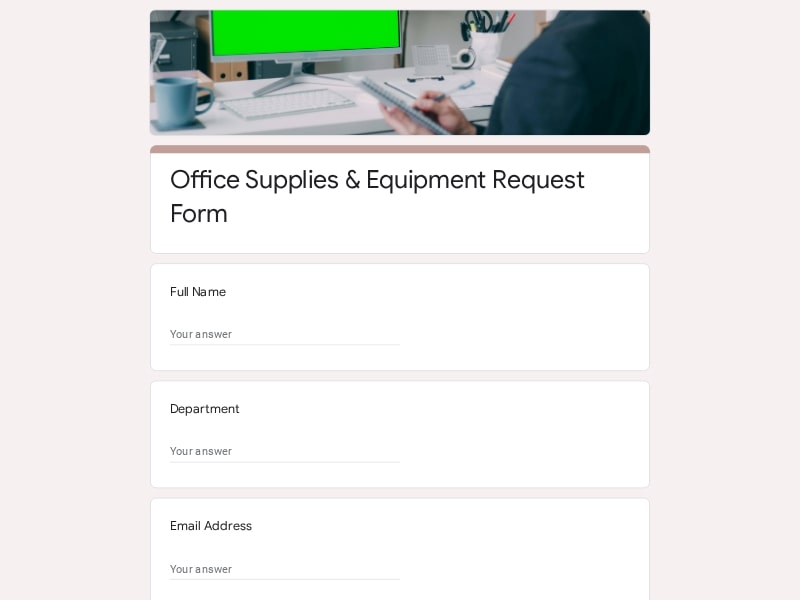 Preview
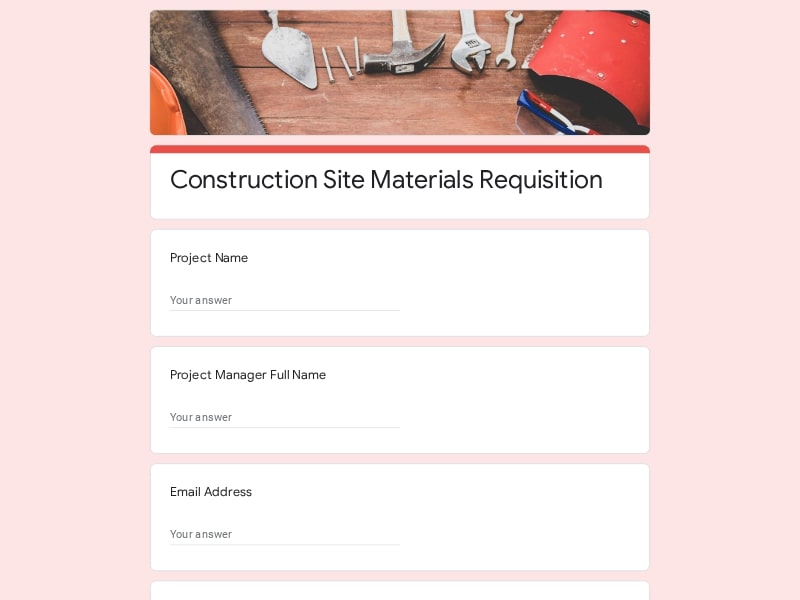 Preview
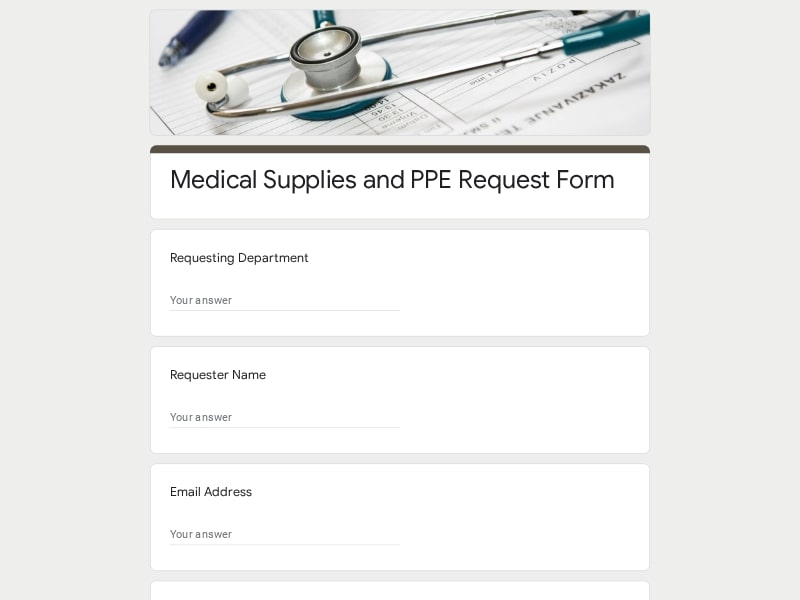 Preview
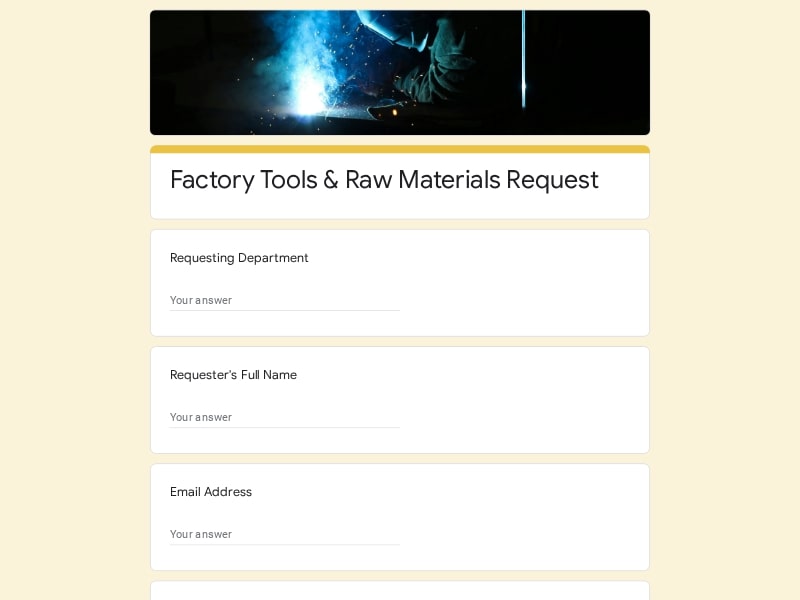 Preview
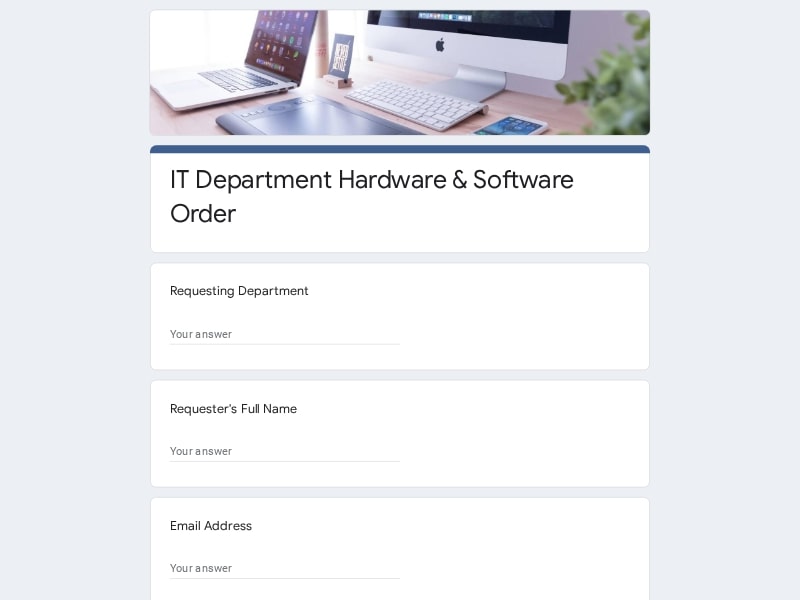 Preview
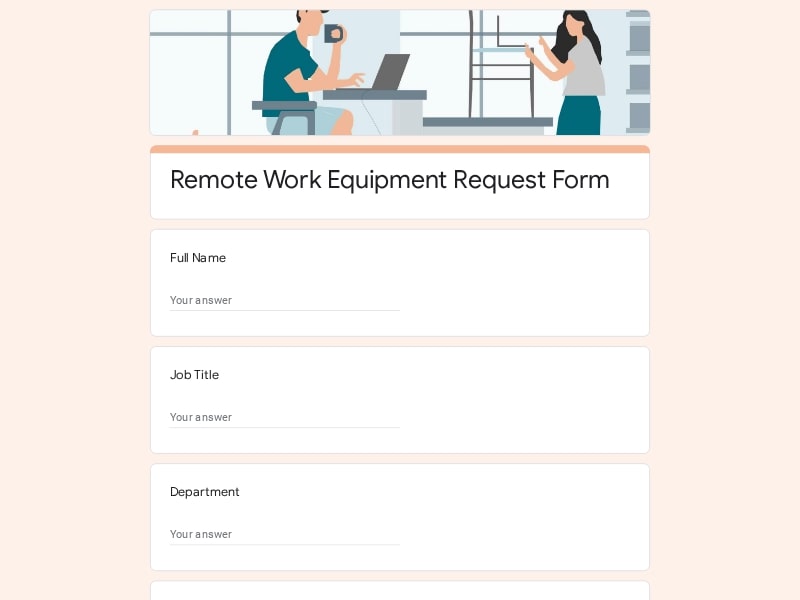 Preview
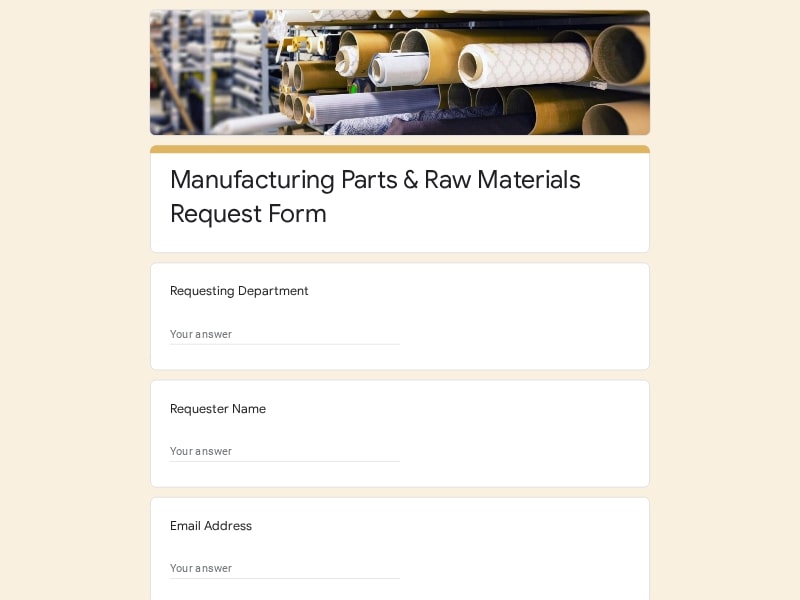 Preview
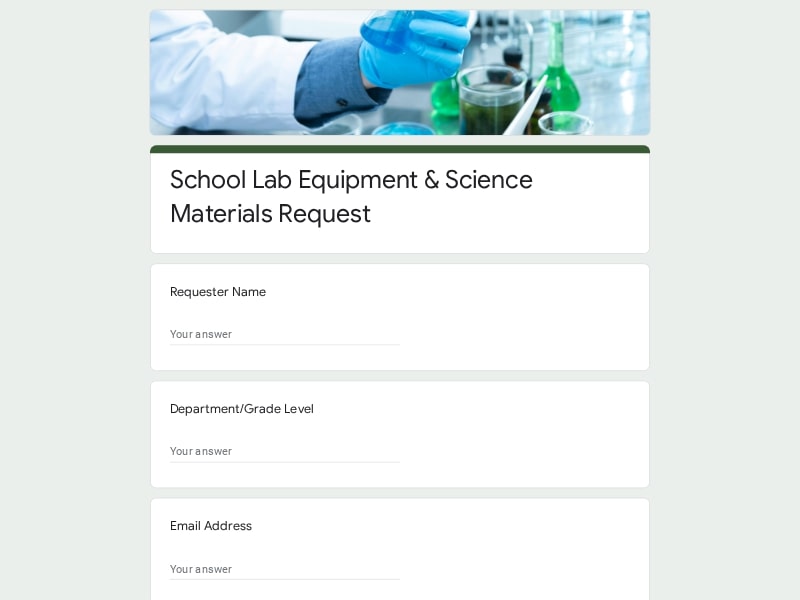 Preview
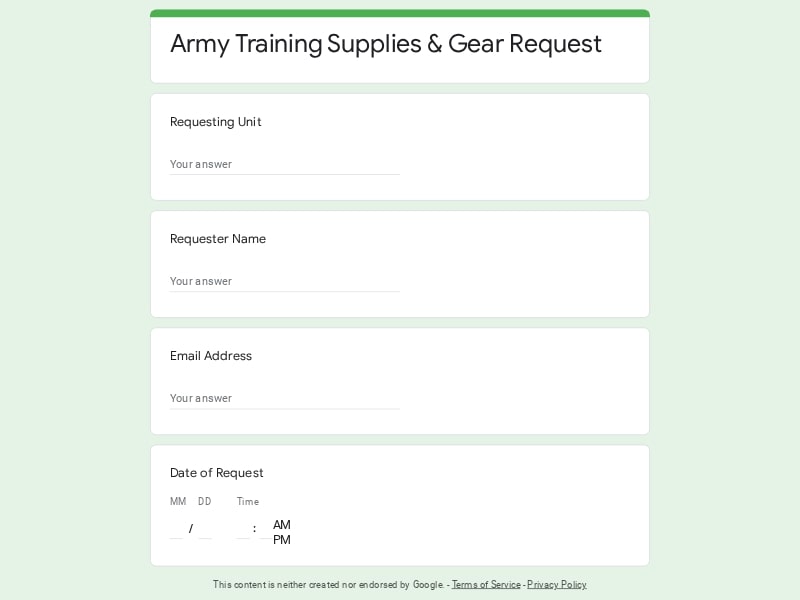 Preview
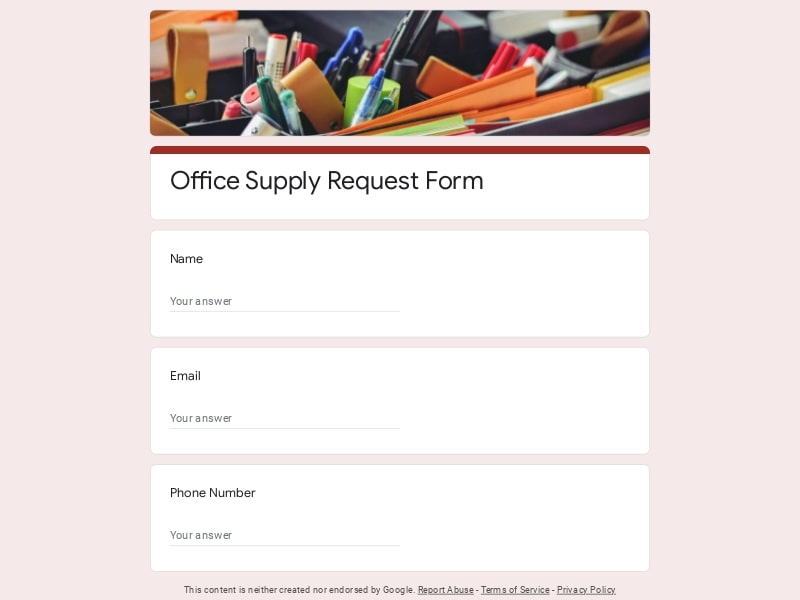 Preview
A supply request form is a structured document used by organizations to collect, review, and process requests for needed items, materials, or operational resources in one standardized format. Instead of handling office supplies, construction material, medical stock, stationery, teaching resources, or replacement inventory through informal messages, teams use one centralized request form to document what is needed, why it is needed, how urgently it is required, and who is responsible for fulfillment.
In Google Forms, this process becomes editable, shareable, and easy to manage, while every submitted request can be automatically stored, filtered, and exported into Excel, Google Sheet, or PDF reports for purchasing and recordkeeping.
A practical supply request form should help the person submitting the request provide complete information the first time, while also giving purchasing teams, inventory managers, school administrators, or department supervisors enough detail to review, approve, source, and fulfill the order without unnecessary clarification. The strongest Google Forms layouts are built around operational accuracy: each section should reduce delays, prevent incomplete submissions, and make the full request workflow easier to track after responses begin coming in.
| Section | What to include | Example questions |
|---|---|---|
| Requester Identification | Clear information about who is submitting the supply request, which department they belong to, and who should be contacted if purchasing staff need clarification or approval confirmation. | What is your full name? Which department or team are you submitting this request for? What is your work email or phone number? Who is your direct supervisor? |
| Supply Category Selection | A dropdown or multiple-choice classification that identifies what kind of supply, material, stationery, office product, medical item, classroom resource, or construction equipment support is being requested. | Which category best describes this request? Is this for office supplies, inventory restock, construction material, or medical use? Are you requesting stationery or operational equipment? Does this item fall under classroom resources? |
| Detailed Item Description | Specific product names, model references, sizes, packaging details, color preferences, brand requirements, or technical notes so the supply order can be fulfilled accurately. | What item do you need? Please provide the exact product description. Do you have a preferred brand, size, or specification? Include item code, SKU, or catalog number if available. |
| Quantity and Unit Information | The exact amount needed along with unit measurement to avoid under-ordering, duplicate purchasing, or vague material submissions. | How many units are requested? What is the measurement unit (boxes, packs, pieces, cases, rolls, etc.)? Is this a one-time request or recurring supply need? What is the minimum acceptable quantity? |
| Purpose and Usage Context | A short explanation showing how the requested supply will be used internally and whether it supports daily operations, a special project, teaching activity, patient care, maintenance task, or field construction work. | What is this supply needed for? How will these materials be used? Is this request tied to a project, event, or classroom activity? What happens if this item is not supplied on time? |
| Need-By Date and Priority | Timeline expectations that help procurement teams prioritize urgent requests and separate emergency replenishment from standard ordering cycles. | When do you need this item delivered? How urgent is this request? Is this supply request business-critical? Can this order wait until the next scheduled purchasing cycle? |
| Inventory Availability Check | Verification fields that determine whether the requester has checked current stock, existing inventory rooms, or previously unused materials before creating a new request. | Have you checked existing inventory before submitting? Is this item currently out of stock? Are there substitute supplies available on site? Has this material been requested recently? |
| Budget and Cost Estimate | Approximate pricing, budget codes, department spending references, or grant/fund allocations to support financial review and approval decisions. | What is the estimated cost of this supply? Which budget should this purchase be charged to? Is this within your department allowance? Do you have a vendor quote or price reference? |
| Approval and Authorization | Supervisor sign-off information, manager review checkpoints, or internal purchasing authorization notes for controlled procurement environments. | Does this request require supervisor approval? Who approved this order internally? Has department management reviewed this request? Please enter the approver’s name or email. |
| Delivery / Fulfillment Details | Final logistical information about where the supply should be delivered, who will receive it, and whether special handling is required for medical, fragile, or construction materials. | Where should the requested supplies be delivered? Who will receive the order on arrival? Are there any storage or handling instructions? Does this item require scheduled delivery coordination? |
Supply request workflows vary significantly depending on whether the organization is handling small recurring office items, high-volume warehouse stock, regulated medical products, or project-based material distribution. That is why effective Google Forms templates are usually built around the real fulfillment environment rather than using one generic request sheet. Below are the most useful categories and the situations where each one creates the most value.
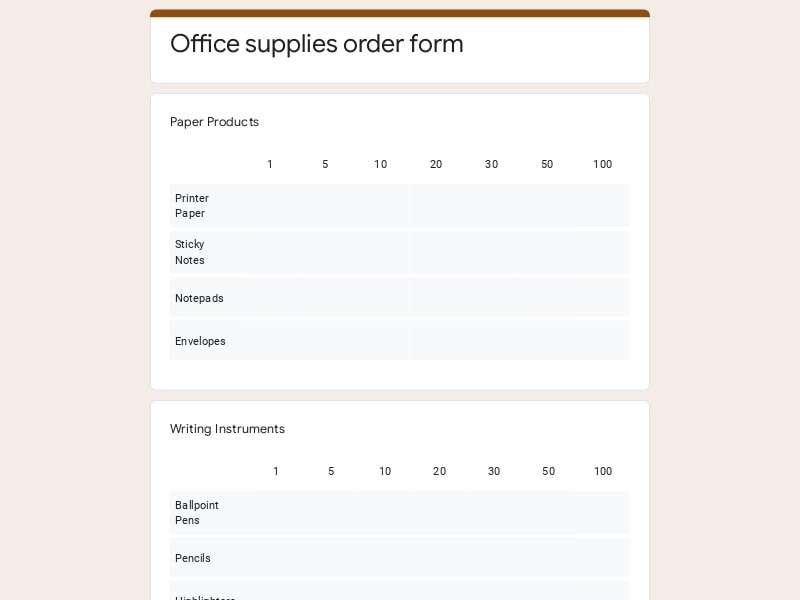
These forms are built for recurring internal requests involving pens, toner, folders, printer paper, desk accessories, breakroom products, mailing materials, and general stationery. They are especially useful for corporate offices, HR departments, finance teams, coworking spaces, and administrative staff that process a constant flow of low-cost but high-frequency office supplies. With Google Forms, these requests can be routed into one live spreadsheet, making reorder patterns and department consumption easier to monitor.
Construction and maintenance teams require a more specification-heavy request form because material shortages can directly affect labor schedules and project timelines. These templates typically include site location, project code, item dimensions, safety notes, bulk quantity fields, and urgent fulfillment indicators. Contractors, facility managers, public works departments, and field supervisors benefit most from this format because it turns each material request into a traceable supply order instead of a last-minute phone call.
Medical environments need strict control over disposable items, treatment materials, PPE, pharmaceuticals support stock, and sterile equipment accessories. A medical request form usually includes department destination, clinical use purpose, quantity precision, inventory depletion notes, and urgency classification. Hospitals, dental offices, private clinics, labs, and care facilities use these forms to reduce the risk of missing essential supplies while maintaining cleaner procurement documentation.
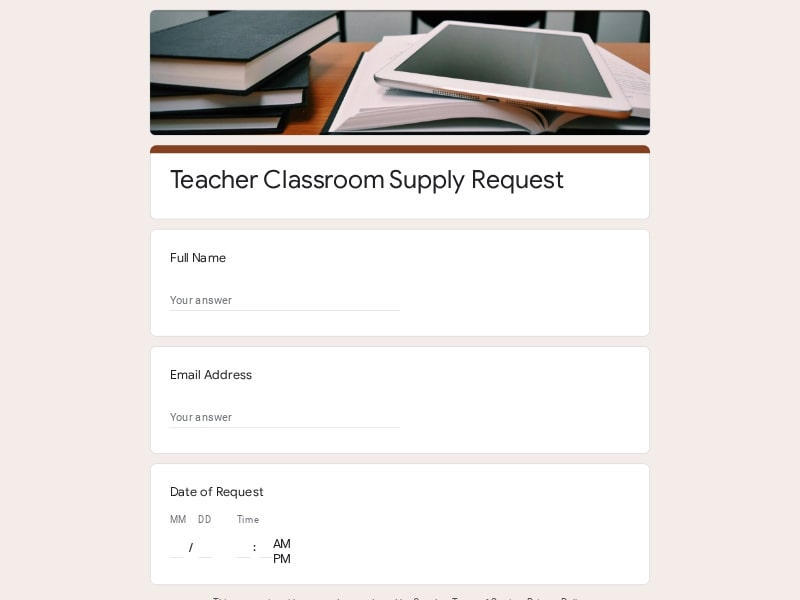
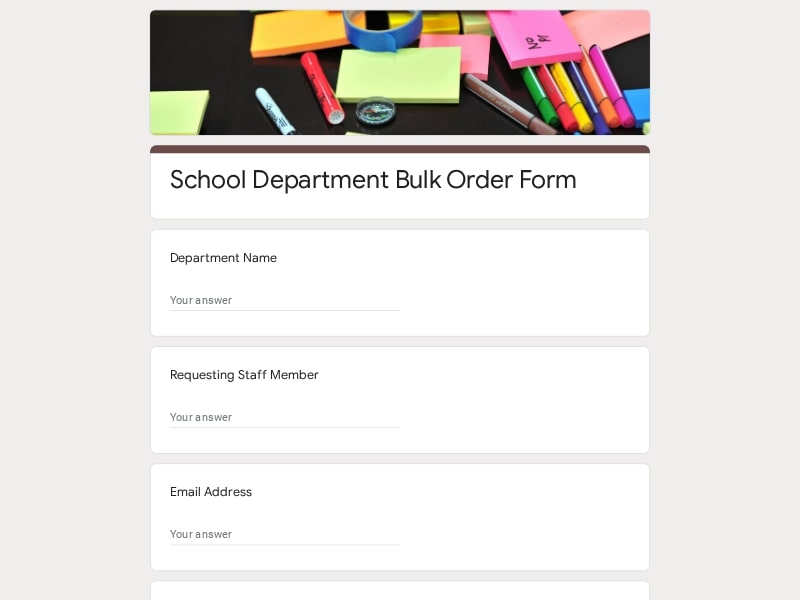
Schools and educational institutions often manage hundreds of smaller requests for books, worksheets, markers, art tools, science lab materials, storage bins, learning aids, and seasonal classroom stationery. A request form for teachers helps principals and district administrators centralize what each classroom actually needs, compare budget demand across grades, and avoid fragmented email requests from staff. This template type is ideal when educational resources are funded in cycles or require approval before purchase.
These forms are designed for businesses that manage consumables, replacement parts, maintenance stock, shipping materials, or internal distribution supplies. Instead of simply requesting an item, the form focuses on inventory quantity remaining, reorder threshold, bin location, item code, and stock movement frequency. Warehouses, manufacturing teams, retail operations, and logistics departments use this template to keep resource flow measurable and prevent silent shortages.
Some organizations need one editable form design that can process many request categories without maintaining separate documents for every team. These universal templates use conditional logic, category branching, and customizable sections inside Google Forms so the same sample layout can handle office supply submissions, material requests, classroom resources, medical replenishment, and internal purchasing approvals in one place. This is often the best choice for growing businesses that need scalability without administrative complexity.
Traditional request methods such as email chains, handwritten slips, Word files, or static spreadsheets may collect information, but they rarely create a dependable procurement process. Supply workflows need standardization, searchable records, editable response management, and easy export options—especially when multiple departments are submitting requests every week. Google Forms provides a more scalable and much more controllable system for collecting, reviewing, sorting, and acting on every supply submission.
Every request is submitted through the same structured form fields, which means purchasing teams no longer waste time chasing missing item names, quantities, delivery dates, or approval details. This consistency makes each supply order easier to review and process.
Unlike printed sheets or static PDFs, Google Forms gives teams a fully editable design that can be updated anytime. You can add new supply categories, approval questions, inventory checkpoints, or department-specific logic without recreating the form from scratch.
Each submitted request is stored in a centralized response dashboard and can also feed directly into Google Sheet for live tracking. That means office supplies, construction material, medical inventory, or classroom resource requests are no longer buried across separate emails.
Managers can sort responses by urgency, date, requester, or department and quickly identify which supply needs require immediate action. This creates a cleaner internal approval chain and reduces fulfillment delays caused by manual review.
Once responses are collected, teams can export the data into Excel, Google Sheet, or PDF formats for vendor communication, purchasing logs, budget reporting, or inventory audits. This makes the request form useful long after submission collection is finished.
The same Google Forms sample can be duplicated and adapted for teachers, warehouse teams, office admins, medical coordinators, or construction supervisors. Instead of building separate manual documents, organizations get one flexible resource that scales with operational growth.
Choose your platform and follow the steps to get your office supply request form live in minutes.
Install Google Forms from the App Store. You'll need iOS 16 or later.
Open the app and sign in with your Google account. This is required to save and share forms.
Tap the template in the list.
Edit any question, add your flavor options, update the design theme and colors — all from within the app.
Tap the Share button (top right). Choose how to distribute your form:
The template is instantly copied to your Google Drive — no manual setup needed. You must be signed in to your Google account for this to work.
Auto-copied to Google DriveEdit question text, add your actual flavor options, adjust dropdowns, and personalize the form to your bakery.
Toggle "Required" on essential fields — name, email, order date, and quantity — so no key detail is missed.
Use Google Forms' built-in sharing to distribute your form via URL, embed it on a site, or generate a printable QR code.
Responses appear in real time in the Responses tab, or link to Google Sheets for a full sortable order spreadsheet.
Make sure you're signed in to Google before clicking the button. The form opens directly in Google Forms in your browser — no app download needed.
Scan to use Google Forms on iPhone or iPad!