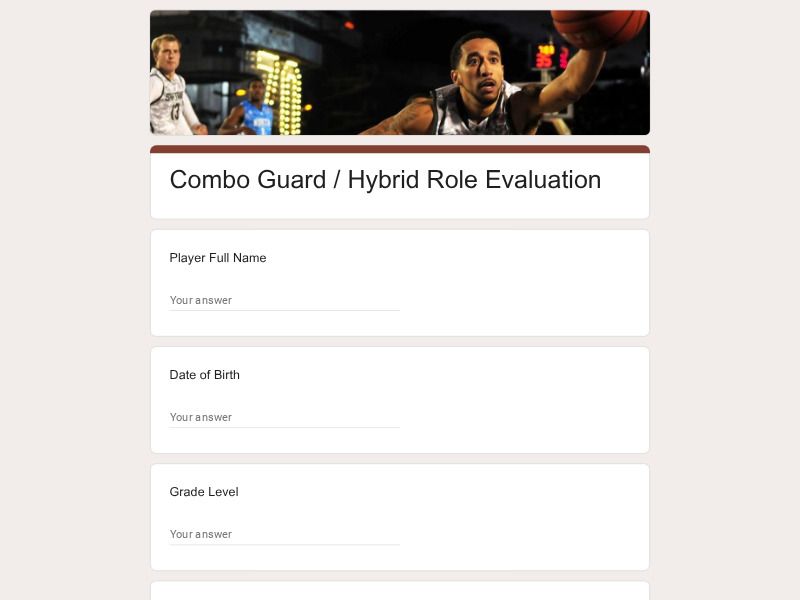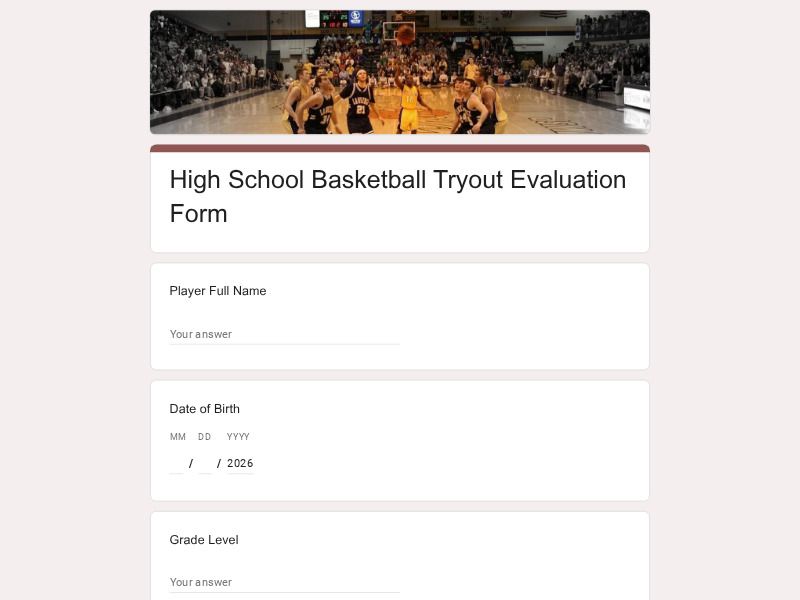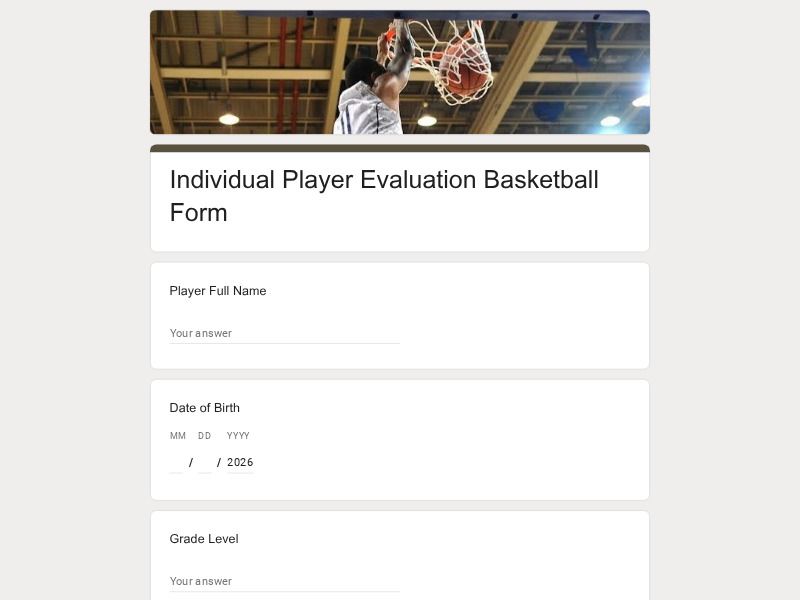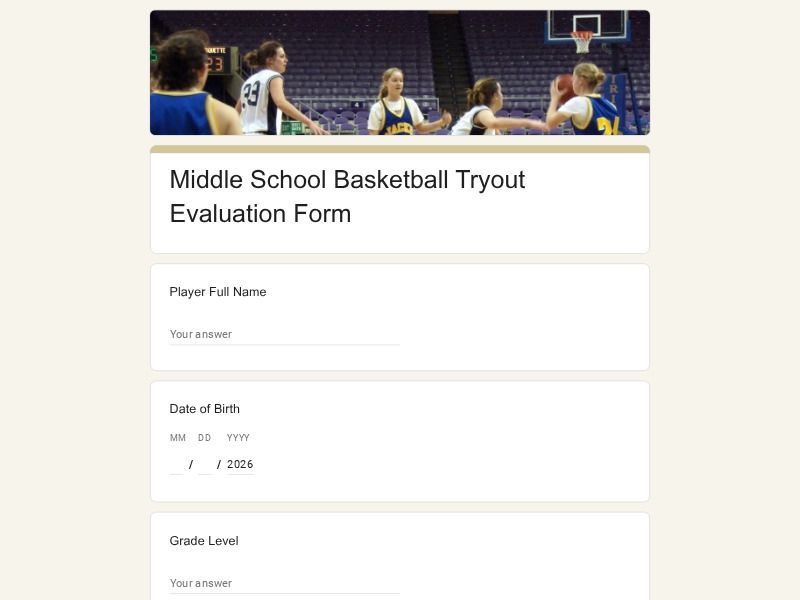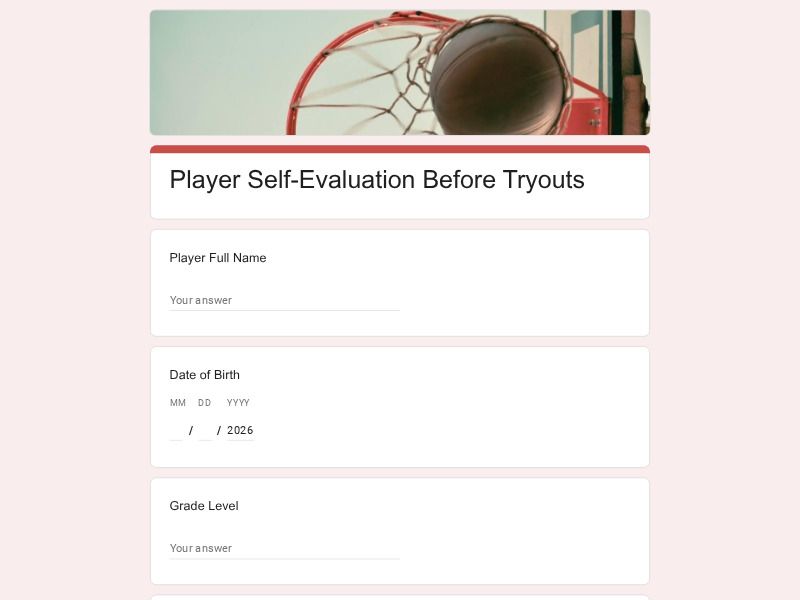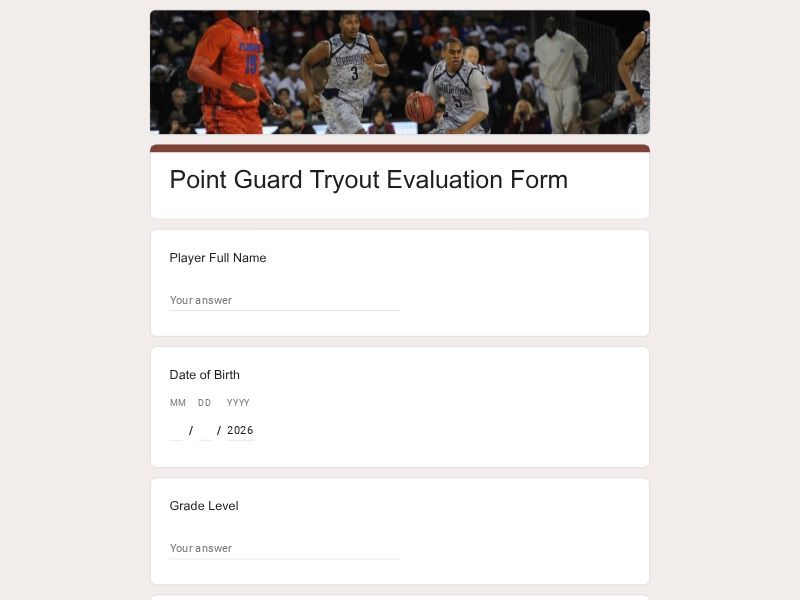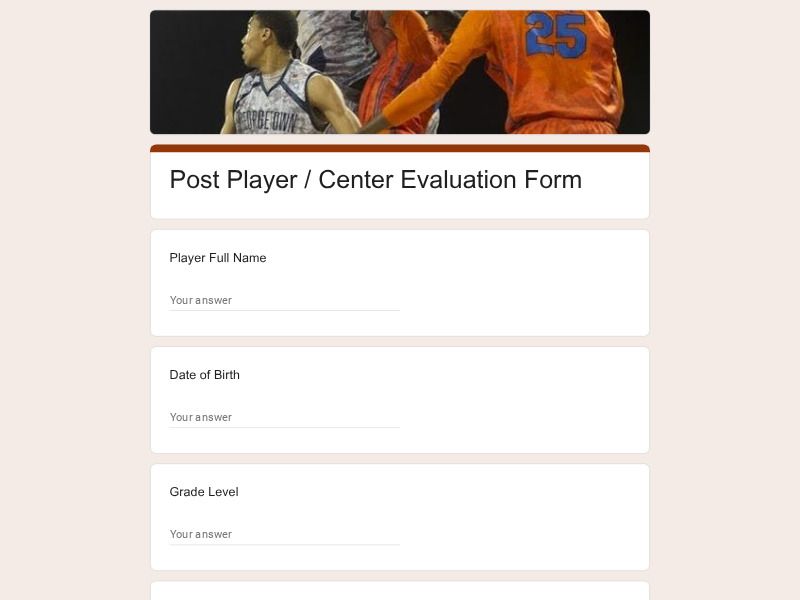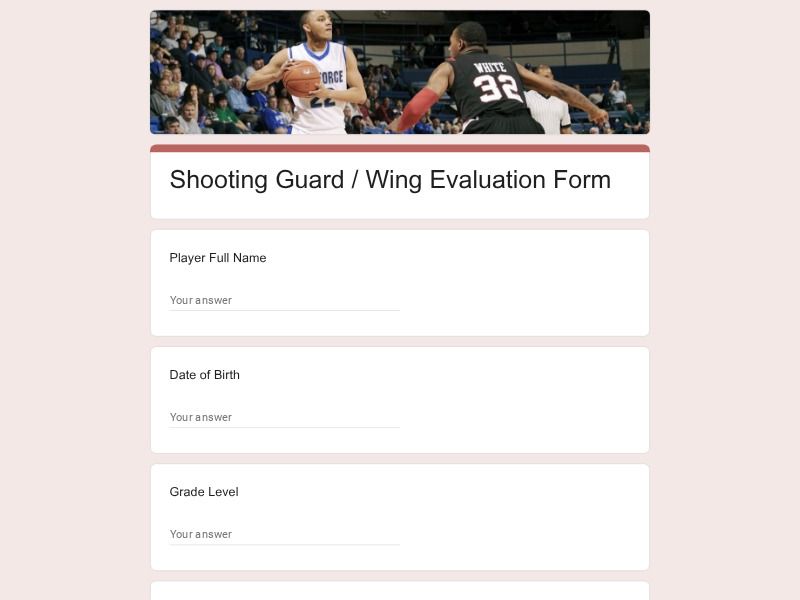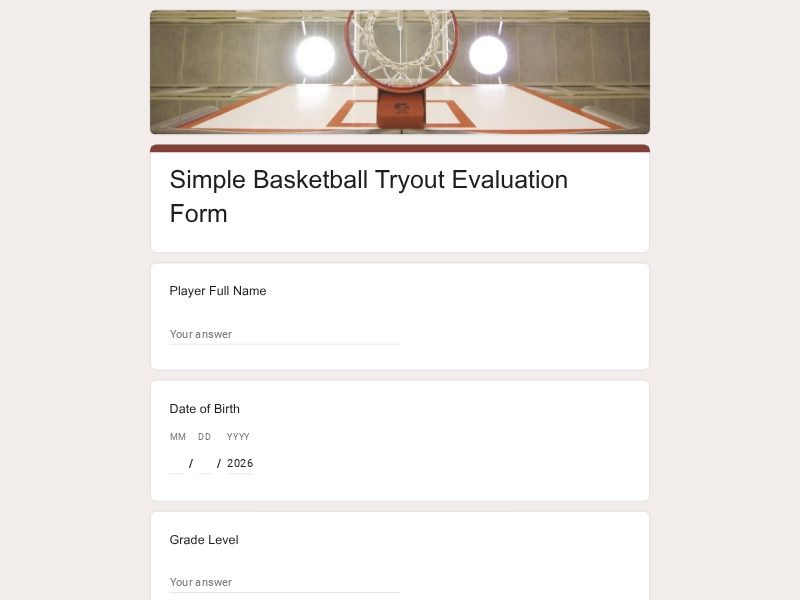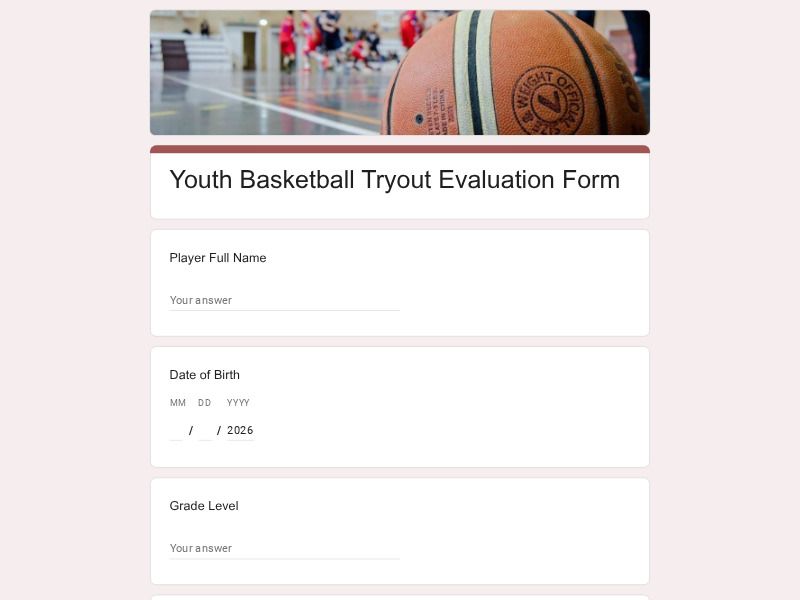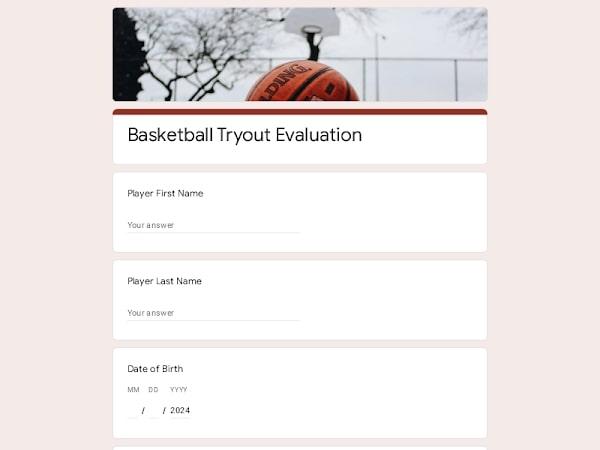

A Basketball tryout evaluation form is a structured digital tool used to assess player performance during team selection. Built specifically for Google Forms, it allows coaches to collect consistent information, apply scoring criteria, and compare athletes using defined metrics.
Instead of relying on handwritten notes, coaches can use an editable form with built-in scoring sheet sections, rating scales, rubrics, and checklist items. All responses are automatically recorded and can be exported to Excel, Google Sheet, or PDF for deeper analysis, reporting, and roster decisions.
These templates are designed for efficient skills assessment — from individual drills to full scrimmage performance — while keeping the evaluation process organized and transparent.
An effective player assessment document should give coaches a structured way to evaluate skills, physical tools, and game intelligence — without slowing down the tryout process. Below is a practical breakdown of what to include, along with example questions and scoring prompts.
| Section | What to Assess | Example Questions / Prompts |
|---|---|---|
| Player Information | Basic identification details and background experience. |
- Player name and jersey number - Grade / Age group - Primary and secondary positions - Previous teams or leagues played |
| Ball Handling & Control | Ability to dribble under pressure, change direction, and protect the ball. |
- Maintains control with both hands (1–5 scale) - Handles defensive pressure effectively? - Demonstrates hesitation / crossover moves? |
| Shooting Skills | Shooting mechanics, consistency, and shot selection. |
- Mid-range shooting consistency (1–5) - Three-point accuracy during drills - Proper shooting form and balance? - Makes good shot decisions in scrimmage? |
| Passing & Court Vision | Decision-making, awareness, and ability to create opportunities. |
- Sees open teammates quickly? - Delivers accurate passes under pressure? - Turnover frequency during scrimmage? |
| Defense | On-ball defense, help defense, positioning, and effort. |
- Defensive stance and footwork (1–5) - Anticipates passing lanes? - Communicates on switches? - Hustle and recovery effort? |
| Athleticism | Speed, agility, vertical ability, and conditioning. |
- Sprint speed (baseline-to-baseline time) - Lateral quickness during drills - Endurance throughout session - Explosiveness when attacking the rim? |
| Basketball IQ | Game awareness, spacing, and tactical understanding. |
- Makes smart off-ball cuts? - Understands defensive rotations? - Adapts to coaching feedback quickly? |
| Attitude & Coachability | Work ethic, communication, and responsiveness to instruction. |
- Accepts feedback positively? - Communicates with teammates? - Demonstrates leadership qualities? - Effort level during all drills? |
| Overall Evaluation | Summary scoring and final roster recommendation. |
- Overall rating (1–10) - Strengths observed - Areas for development - Recommended team level (Varsity / JV / Development) |
The structure of a player evaluation sheet should reflect the competitive level, roster size, and developmental goals of the program. Below is a coaching-driven breakdown of the most effective formats and when to use them.
| Form Type | Best For | Primary Evaluation Focus | Key Assessment Details |
|---|---|---|---|
| Youth Development Evaluation Form | Elementary school teams, rec leagues, beginner clinics | Foundational skill development and effort |
- Basic dribbling control (both hands) - Layup footwork and finishing form - Defensive stance fundamentals - Ability to follow instructions - Hustle and enthusiasm during drills |
| Middle School Competitive Tryout Sheet | School A/B teams, early travel programs | Skill execution under light game pressure |
- Ball security vs. on-ball defense - Shot selection awareness - Transition effort (offense to defense) - Help-side positioning - Decision-making in controlled scrimmage |
| High School JV Evaluation Form | Junior Varsity roster selection | Role identification and tactical understanding |
- Ability to execute offensive sets - Defensive rotations and communication - Conditioning across full practice pace - Response to coaching adjustments - Consistency over multiple sessions |
| Varsity / Advanced Competitive Assessment | Varsity teams, elite prep programs | Impact potential and game IQ |
- Pick-and-roll reads (offensive & defensive) - Late-game decision-making - Defensive versatility (multi-position coverage) - Physical tools: lateral speed, explosiveness - Leadership presence in live scrimmage |
| Travel Team / AAU Evaluation Template | Highly competitive club teams | Athletic ceiling and tournament readiness |
- Ability to create scoring opportunities - Transition speed and finishing through contact - Defensive intensity against top talent - Measurables (wingspan, sprint time, vertical jump) - Competitive mentality in high-tempo play |
| Position-Specific Evaluation Form | Programs building clearly defined roles | Skill sets tied to positional responsibilities |
Point Guard: decision-making, ball pressure handling, assist-to-turnover ratio Wing: perimeter defense, spacing discipline, catch-and-shoot efficiency Post: rebounding instincts, paint footwork, physical interior presence |
| Large-Group Quick Rating Sheet | Open tryouts with 40+ players | Fast comparison and shortlist identification |
- Effort level and competitiveness - Core skill competency - Awareness during scrimmage - Simple 1–3 or checkmark scoring system - Space for short coach notes |
Matching the form structure to the level of play ensures the evaluation process is both fair and efficient. Development programs prioritize growth indicators, while competitive rosters require detailed game-read assessments and clear role projection.

Scan to use Google Forms on iPhone or iPad!