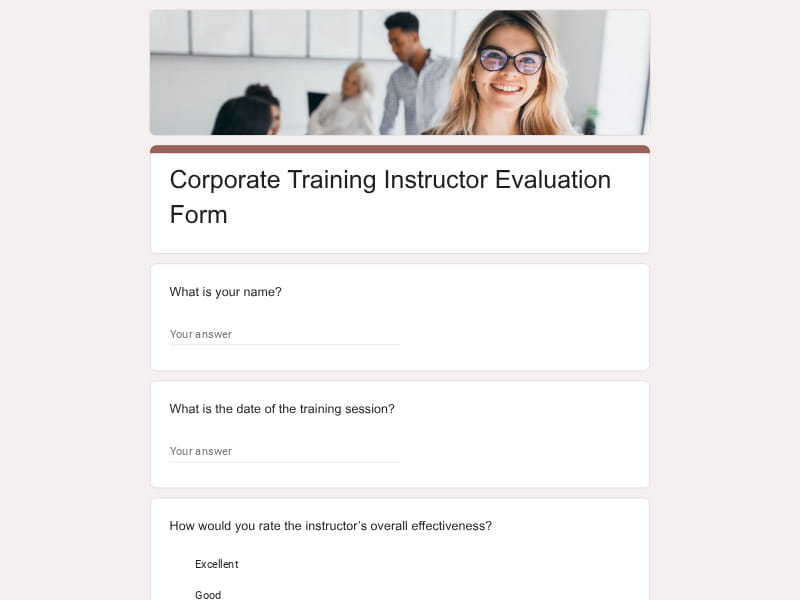
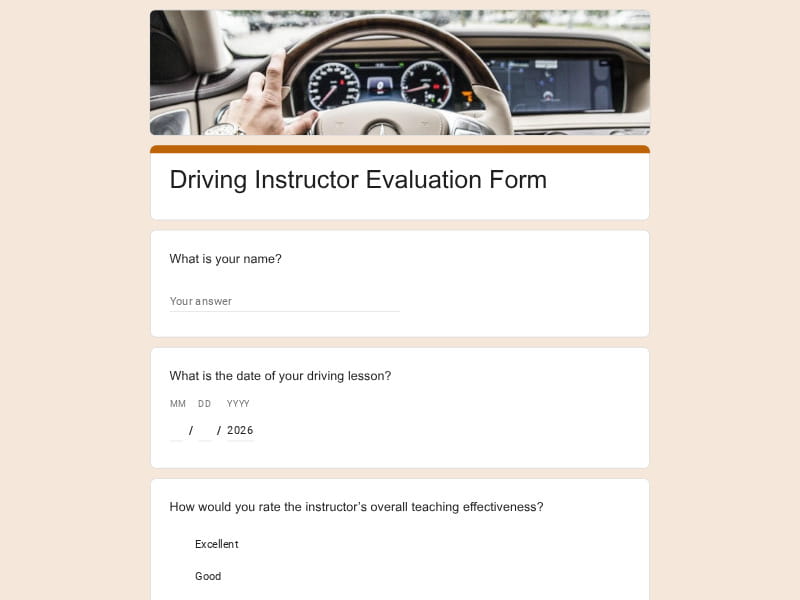
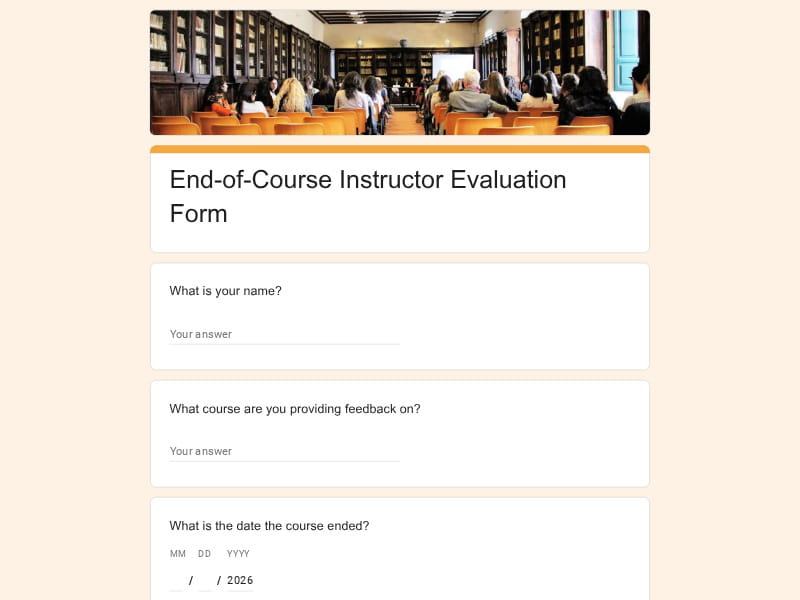
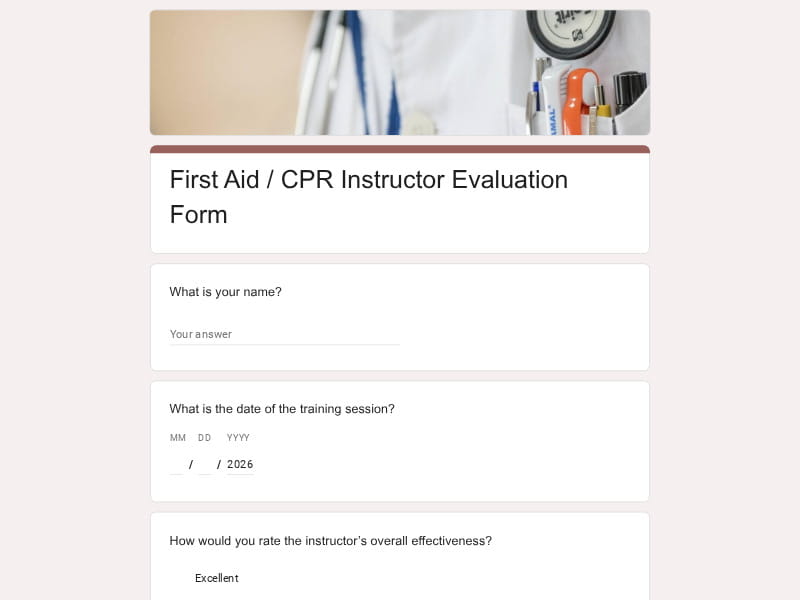
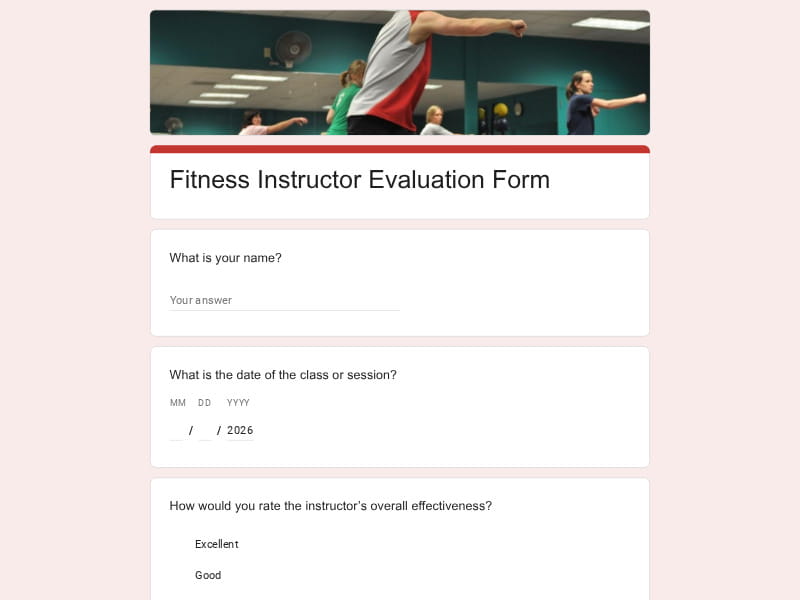
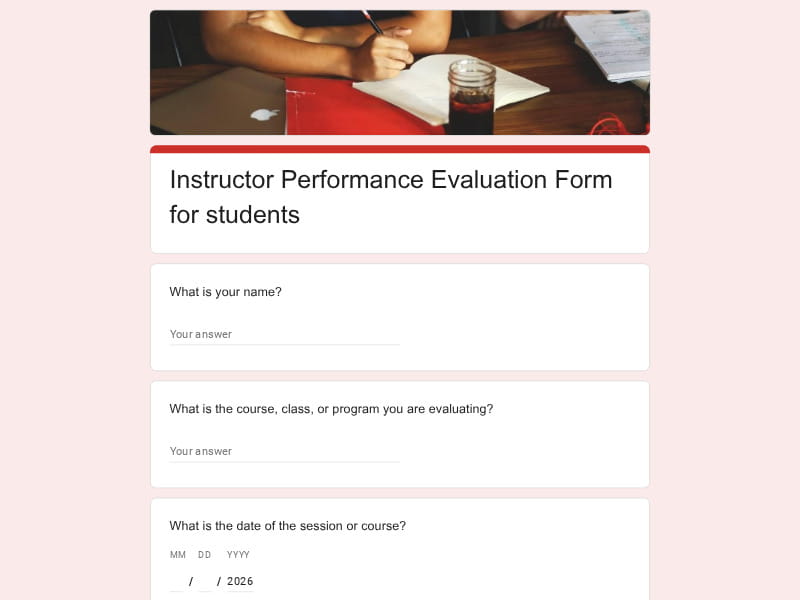
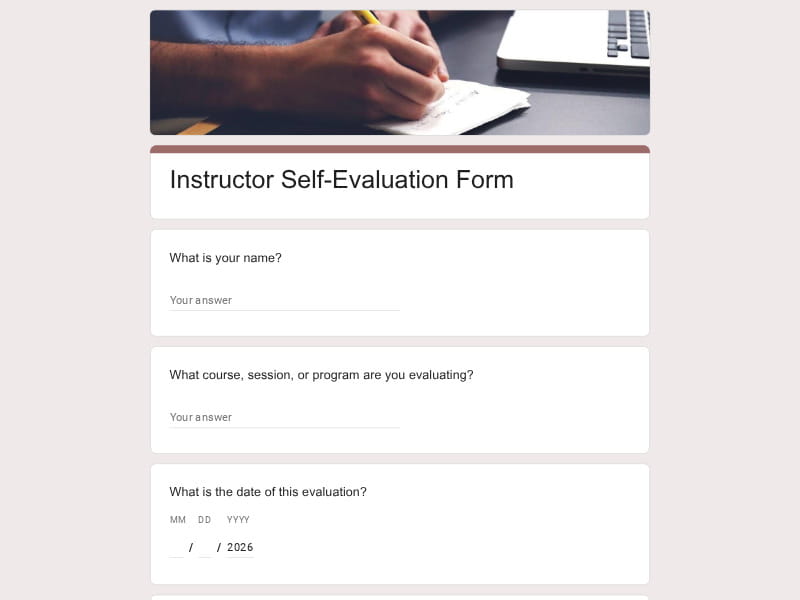
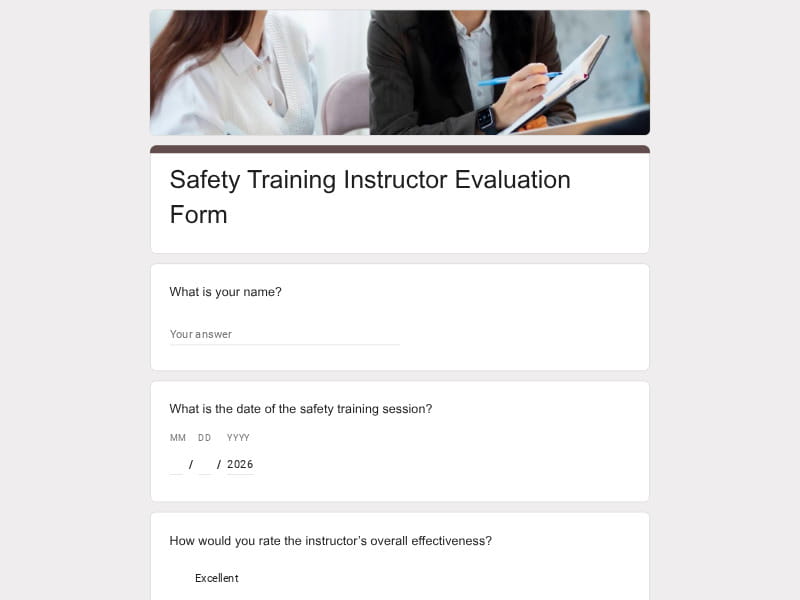
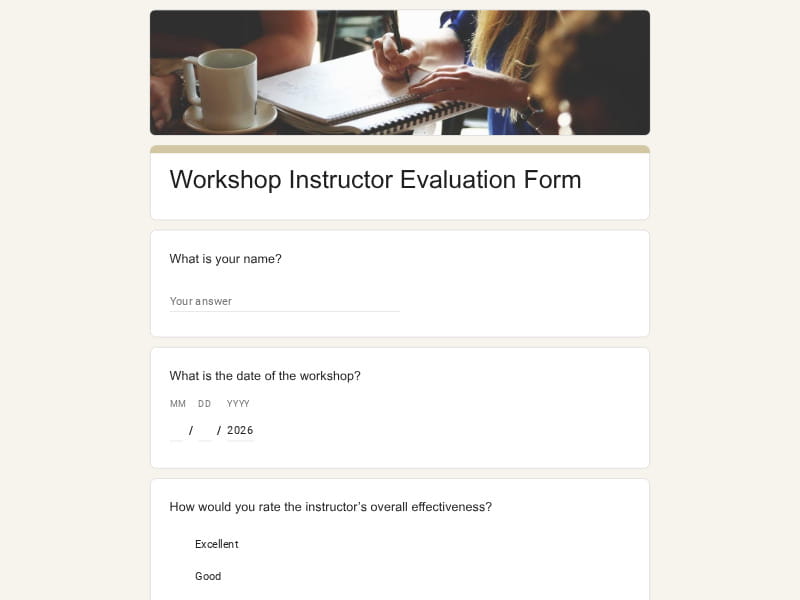
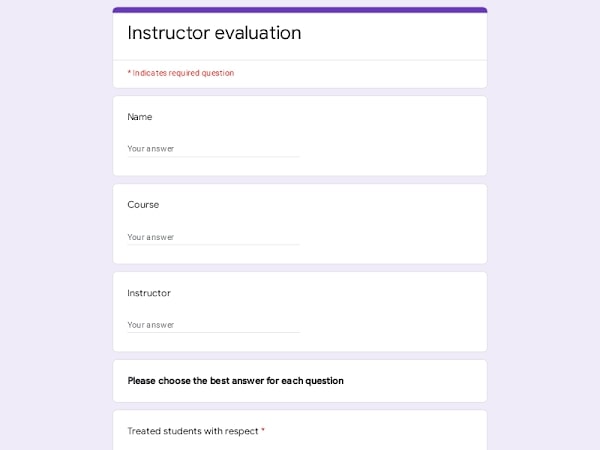
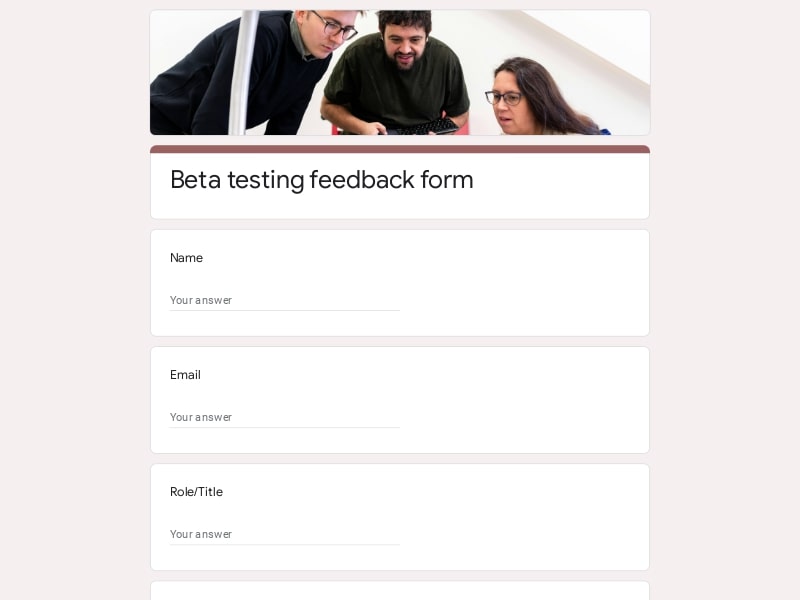
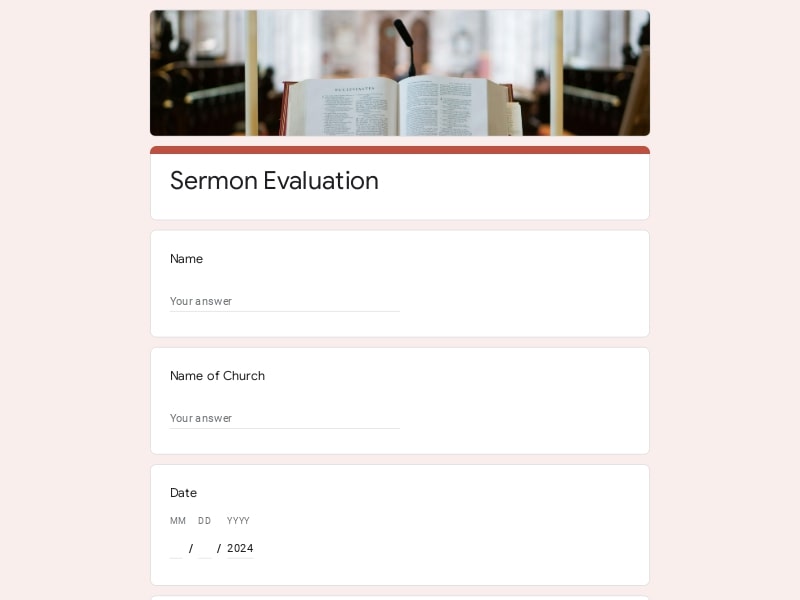
Collect useful feedback from students and participants with instructor evaluation form templates designed for Google Forms. These templates make it simple to ask clear questions and review responses in a structured way.
What a Well-Designed Instructor Evaluation Should Include
A useful evaluation focuses on clear, practical questions that help students share meaningful feedback about the learning experience.
The goal is not simply to rate the instructor, but to understand how effectively the material was delivered, how well students were supported,
and what could improve future sessions. A good form combines rating questions with a few open responses so participants can explain their answers.
| Evaluation Area |
What Should Be Assessed |
Example Questions for the Form |
| Clarity of Instruction |
Whether the instructor explains concepts in a clear and understandable way and adapts explanations when students struggle with the material.
|
- How clearly did the instructor explain the main topics?
- When concepts were difficult, did the instructor provide helpful explanations or examples?
- Rate how easy it was to follow the instructor’s explanations.
|
| Preparation and Structure |
How well the sessions were organized, whether the instructor appeared prepared, and whether the learning flow felt logical to students.
|
- How well organized were the sessions?
- Did the instructor appear prepared for each class or training session?
- Were the objectives of the lesson or training clearly communicated?
|
| Engagement and Participation |
The instructor’s ability to keep students involved, encourage participation, and create an interactive learning environment.
|
- Did the instructor encourage participation and discussion?
- How engaging were the learning activities or examples used?
- Did you feel comfortable asking questions during the session?
|
| Communication and Accessibility |
How approachable the instructor is when students need help, clarification, or additional support.
|
- Was the instructor responsive when students asked questions?
- How effectively did the instructor communicate with students during the course?
- Did the instructor create an environment where feedback and questions were welcomed?
|
| Learning Materials and Examples |
Whether the materials, demonstrations, and examples helped students understand the subject and apply what they learned.
|
- How helpful were the examples or demonstrations provided by the instructor?
- Did the materials support your understanding of the subject?
- Were real-world examples used effectively during instruction?
|
| Learning Impact |
How much students feel they gained from the course, workshop, or training session.
|
- How much did this instructor help improve your understanding of the topic?
- Do you feel more confident applying what you learned?
- How valuable was this learning experience overall?
|
| Overall Feedback |
Open feedback that allows students to share insights that rating questions may not capture.
|
- What did the instructor do particularly well?
- What could the instructor improve in future sessions?
- Do you have any additional comments or suggestions?
|
In Google Forms, these sections can be implemented using rating scales, multiple-choice questions, and open text responses.
Once students submit their answers, results can be reviewed directly in the form or exported to Excel, Google Sheets, or PDF
for deeper analysis and reporting.
Common Areas Where Feedback Forms Are Used
Instructor evaluation forms can be adapted to many different learning environments.
Although the core goal is always the same—collecting useful feedback about how an instructor teaches—the questions and structure often vary depending on the type of program and the people completing the form.
Below are several common contexts where these evaluations are especially useful.
-
Academic education
Schools, colleges, and universities use evaluation forms to gather feedback from students about teaching methods, clarity of explanations, course structure, and classroom engagement. These evaluations help teachers and administrators understand how effectively material is delivered and where improvements may be needed.
-
Corporate training programs
Companies often evaluate instructors who lead employee training sessions, onboarding programs, or professional development workshops. Feedback from participants helps learning and development teams assess whether instructors communicate clearly, deliver practical knowledge, and keep training sessions effective.
-
Professional courses and certification programs
Organizations that provide industry certifications or skill-based courses use evaluation forms to measure instructor performance across longer learning programs. Responses help program coordinators ensure consistent teaching quality and identify areas where instructors may need additional support.
-
Workshops, seminars, and short learning events
Conferences, bootcamps, and training workshops frequently collect quick feedback after a session. These forms focus on how clearly the instructor presented the topic, whether the session was engaging, and how useful participants found the material.
-
Coaching and independent instruction
Private instructors, tutors, and coaches also benefit from simple evaluation forms. Student feedback helps them understand how well their teaching approach works and what adjustments could improve the learning experience.